A factory injury can leave you facing treatment, physical restrictions and time away from work. Our attorneys can help you understand your rights and pursue available workers’ compensation benefits.
24/7 IntakeGet the help you need, when you need it.
No Fee Unless We RecoverNo upfront attorney fees; we’re paid if we recover benefits.
Se Habla EspañolHablamos español y estamos aquí para ayudarle.
Factory and manufacturing employees work around heavy machinery, production lines, moving equipment, tools, and materials that can create serious injury risks. An accident on an Indianapolis factory floor can leave a worker facing significant medical treatment, physical limitations, missed work, and uncertainty about returning to a physically demanding position.
When a factory injury occurs in connection with employment, Indiana workers’ compensation benefits may provide important support during recovery. Our Indianapolis factory injury attorneys at Flores Law Group represent employees who have been hurt while performing their jobs. We help injured factory and manufacturing workers understand their rights, navigate disputes, and pursue the workers’ compensation benefits available under Indiana law.
Common Hazards Facing Indianapolis Factory and Manufacturing Workers
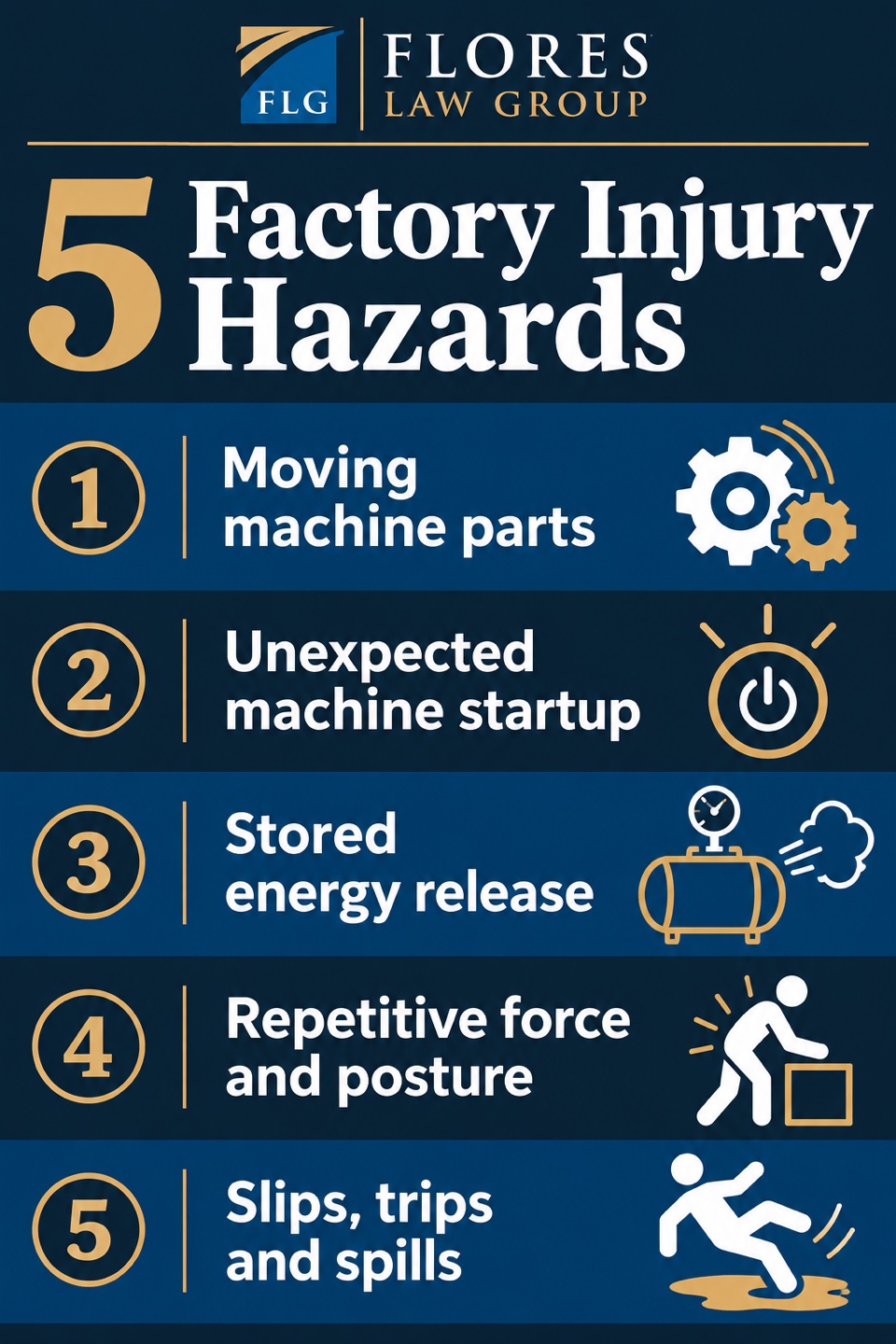
Factories and manufacturing facilities can present a combination of hazards that workers encounter throughout each shift. Employees may operate machinery, assemble products, move materials, perform repetitive tasks, work near powered equipment, or handle tools and materials while production continues around them.
Common factory and manufacturing hazards include:
Heavy machinery and moving equipment
Conveyor belts and production lines
Cutting, pressing, stamping, and fabrication equipment
Forklifts and other material-handling vehicles
Hot surfaces, materials, and equipment
Electrical equipment and powered tools
Slippery or obstructed floors and walkways
Heavy lifting and manual material handling
Repetitive movements and prolonged physical tasks
Some Indianapolis factory injuries result from a sudden event, such as an employee becoming caught in machinery or being struck by moving equipment. Other conditions develop gradually because workers perform the same physically demanding movements throughout their shifts.
Production environments can also expose employees to several hazards at the same time. A worker may be concentrating on operating equipment while forklifts move materials nearby, products travel along conveyor systems, and coworkers perform other tasks within the same area. When something unexpectedly moves, falls, malfunctions, or interferes with a worker’s task, the resulting accident can cause significant injuries.
Physical demands can create risks even when machinery is not directly involved. Repeated lifting, bending, reaching, twisting, pushing, or pulling can place considerable strain on the back, shoulders, knees, and other parts of the body. Employees who stand for extended periods or repeatedly perform the same production task may also develop painful conditions over time.
Whether an injury occurs suddenly or develops through repeated job duties, its effects can interfere with a factory employee’s ability to safely perform regular work.
Common Causes of Factory Injuries in Indianapolis
Factory accidents can occur during ordinary production, maintenance, cleaning, material handling, and equipment operation. Understanding what happened can be important when documenting an injury and establishing its connection to employment.
Machinery and Equipment Accidents
Industrial machinery can cause severe injuries when employees come into contact with moving components, cutting surfaces, presses, rollers, or other equipment. Workers may be injured while operating machinery, feeding materials into equipment, clearing obstructions, performing maintenance, or working near another employee who is using a machine.
Machinery accidents can result in cuts, fractures, crush injuries, amputations, and other serious trauma. Even an accident involving a relatively small piece of equipment can prevent an employee from performing regular factory duties for an extended period.
Caught-In and Caught-Between Accidents
A worker can suffer a caught-in or caught-between injury when a hand, arm, leg, clothing, or another part of the body becomes trapped in machinery or between objects. Employees may also be pinned between equipment, materials, vehicles, or fixed surfaces.
These incidents can occur quickly and may cause severe injuries because of the force generated by industrial equipment or heavy materials.
Falls and Material-Handling Accidents
Factory workers can slip or trip because of liquids, debris, cords, materials, uneven surfaces, or obstructions on the production floor. Falls may also occur from ladders, platforms, stairs, or elevated work areas.
Material handling creates additional risks. Workers may be hurt while lifting heavy items, moving loaded carts, handling pallets, or working around forklifts and suspended or moving loads. Common contributing circumstances can include:
Lifting objects that are heavy or awkwardly shaped
Carrying materials through congested work areas
Pushing or pulling loaded carts and equipment
Being struck by falling or shifting materials
Working near forklifts and other powered vehicles
Repeatedly bending or reaching to handle products
Repetitive Production Work
Not every factory injury involves a dramatic accident. Assembly, packaging, fabrication, sorting, and other production jobs may require employees to repeat the same movements hundreds of times during a shift.
Repeated gripping, reaching, lifting, bending, twisting, or using tools can contribute to pain and physical limitations affecting the hands, wrists, elbows, shoulders, back, or other areas. Symptoms may initially seem manageable but become more significant as repetitive work continues.
Our team handles many types of occupational injuries affecting Indianapolis employees, including factory accidents, workplace back injuries, warehouse injuries, repetitive stress conditions, and injuries caused by work-related vehicle accidents. Regardless of whether an injury occurs in a sudden machinery accident or develops through repeated production work, appropriate medical care and documentation can become important to an injured employee’s health and workers’ compensation claim.
Serious Injuries That Can Occur in Indianapolis Factories
Factory and manufacturing accidents can cause injuries that range from painful strains to permanent, life-altering conditions. Workers may be injured by machinery, moving equipment, falls, heavy materials, repetitive tasks, or other hazards present on a production floor.
Common factory and manufacturing injuries include:
Crush injuries
Amputations and loss of limbs or digits
Broken bones and fractures
Burns
Back and neck injuries
Shoulder and knee injuries
Head and traumatic brain injuries
Severe cuts and lacerations
Repetitive stress injuries
Nerve and soft-tissue injuries
The effects of these injuries can be particularly significant for employees whose jobs depend on their physical abilities. A worker recovering from a hand injury may be unable to safely operate machinery or use tools. An employee with a back, shoulder, or knee injury may struggle with lifting, standing, bending, or other essential production duties.
Some injuries can also require substantial medical treatment and extended time away from work. Serious crush injuries, fractures, burns, and amputations may involve surgery, rehabilitation, and lasting physical limitations. Even injuries that appear less severe initially can interfere with repetitive factory tasks or worsen when employees continue performing physically demanding work.
Our team represents Indianapolis employees with many types of occupational injuries, including workplace back injuries, warehouse injuries, repetitive stress conditions, and injuries resulting from work-related vehicle accidents. When a factory injury prevents an employee from performing regular duties, medical documentation and clearly defined work restrictions can become important parts of the workers’ compensation process.
Workers’ Compensation Benefits After an Indianapolis Factory Injury
An injured factory employee may face medical expenses at the same time an injury limits or prevents the ability to work. Indiana’s workers’ compensation system can provide benefits to eligible employees who suffer covered job-related injuries.
OurIndianapolis workers’ compensation attorneys help injured employees understand their rights and pursue available benefits after serious workplace injuries. Depending on the worker’s condition and circumstances, benefits may involve:
Medical treatment: Workers’ compensation may cover authorized and necessary care for the work injury, including physician visits, diagnostic testing, surgery, medication, therapy, and other treatment.
Temporary disability benefits: Eligible employees who cannot work for a qualifying period because of an injury may receive wage-replacement benefits.
Permanent impairment benefits: Some factory accidents result in lasting impairment after an employee reaches maximum medical improvement.
Work restrictions: Medical providers may temporarily or permanently limit lifting, standing, bending, repetitive movements, machinery operation, or other activities.
Physical restrictions can have significant consequences in a manufacturing environment. An employee who cannot safely lift materials, use an injured hand, stand throughout a shift, or operate equipment may be unable to immediately return to a previous position.
Questions can also arise when an employer offers modified or light-duty work. The duties offered to an injured employee should be considered in light of the medical restrictions associated with the injury. Disagreements over treatment, disability benefits, impairment, or returning to work can make an already difficult recovery more complicated.
What Should You Do After a Factory Accident in Indianapolis?
The actions taken after a factory accident can help create a clear record of the injury and the circumstances surrounding it. Employees should prioritize their immediate medical needs while making sure the workplace injury is appropriately reported and documented.
After suffering an Indianapolis factory injury, workers should generally consider these steps:
Report the injury promptly. Tell the appropriate employer or supervisor about the accident and accurately explain when, where, and how it occurred.
Obtain appropriate medical care. Follow applicable workers’ compensation procedures for treatment while seeking emergency assistance when necessary.
Explain how the accident happened. Provide accurate information about the machinery, equipment, materials, or job duties involved.
Identify potential witnesses. Coworkers who saw the accident or its immediate aftermath may have relevant information.
Preserve important documentation. Keep relevant communications, medical information, work restrictions, and other records connected to the injury.
Follow treatment instructions and physical restrictions. Avoid performing tasks that conflict with restrictions imposed by medical providers.
Documentation can be especially important after accidents involving industrial machinery or complicated production processes. Questions may later arise about which equipment was involved, what task the employee was performing, or how the accident occurred.
Workers should also report symptoms accurately, including those that worsen after the initial incident. Factory injuries involving the back, joints, nerves, or soft tissues may not always reveal their full severity immediately.
Following medical restrictions is particularly important when returning to a production environment. An employee who has been restricted from lifting, repetitive movements, prolonged standing, or operating machinery should understand those limitations before resuming factory duties.
Issues That Can Complicate an Indianapolis Factory Injury Claim
Even when an injury occurs at work, disagreements can develop over how the accident happened, what caused an employee’s condition, or when the worker can safely return to regular duties. Factory environments can create particularly complex questions because accidents may involve machinery, production procedures, repetitive work, and preexisting physical conditions.
Disputes About How the Accident Happened
An employer or insurance carrier may question the circumstances surrounding an injury or whether it occurred while the employee was performing job duties. Accident reports, medical records, witness information, and details about the machinery or task involved may become important when addressing these disputes.
Preexisting Conditions and Repetitive Injuries
Factory work can aggravate areas of the body that have been previously injured or contribute to symptoms that develop gradually. Questions may arise about whether an employee’s current condition is connected to work, a prior injury, or another underlying condition.
Returning to Work With Physical Restrictions
An injured factory worker may be released to modified duty before being able to resume all previous responsibilities. Restrictions can affect lifting, standing, repetitive movements, tool use, or machinery operation. Disagreements may arise when proposed duties appear inconsistent with those limitations.
Some factory accidents may also involve outside contractors, equipment manufacturers, or other third parties. When another person or company may have contributed to an injury, additional legal issues may need to be evaluated alongside the workers’ compensation claim.
How Our Indianapolis Workers’ Compensation Attorneys Help Injured Factory Workers
A serious factory injury can create questions about medical care, disability benefits, work restrictions, and an employee’s future on the job. Our Indianapolis factory injury attorneys help injured workers navigate these issues and protect their rights throughout the workers’ compensation process.
Depending on the circumstances, our team can assist with:
Investigating how a factory or manufacturing accident occurred
Addressing disputed or denied workers’ compensation claims
Reviewing issues involving medical treatment
Addressing temporary or permanent disability benefit disputes
Evaluating medical restrictions and modified-duty assignments
Developing evidence concerning the injury and its connection to employment
Evaluating additional legal issues when an outside party may be involved
Flores Law Group represents Indianapolis factory and manufacturing workers injured while operating machinery, handling materials, performing repetitive tasks, and carrying out other job responsibilities. When an injury interferes with an employee’s ability to work and earn an income, our team helps the worker understand available options and pursue the benefits provided by Indiana workers’ compensation law.
Contact Flores Law Group Today for Your Indianapolis Factory Injury Claim
A factory accident can leave you facing painful injuries, medical treatment, missed work, and uncertainty about whether you can safely return to your previous duties. Flores Law Group helps injured Indianapolis employees navigate workers’ compensation claims and address disputes that can arise during recovery.
If you suffered an injury while working in a factory or manufacturing facility,contact our Indianapolis factory injury attorneys to discuss your accident, the issues affecting your workers’ compensation claim, and the benefits that may be available under Indiana law.
What if a medical bill after my factory injury is sent directly to me?
Our Indianapolis factory injury attorney reviews a bill sent to an injured worker together with the provider, treatment date, and claim information. The Board explains that the employer directs medical care in an Indiana workers’ compensation claim. We check whether the treatment was authorized, whether the provider billed the carrier, and whether a written payment dispute exists. We use those details to evaluate the billing issue rather than treating the mailing address on a bill as a decision about who must pay.
What if I disagree with maximum medical improvement or an impairment rating after a factory injury?
Our Indianapolis factory injury lawyer separates a disagreement about maximum medical improvement from a dispute over an impairment rating. The state’s second-opinion guidance says a worker may request an independent medical examination at no cost when the insurer’s doctor determines that maximum medical improvement has been reached. Before maximum medical improvement, that guidance describes a second opinion at the worker’s expense or through an order from a Worker’s Compensation Board judge. We review the medical report, any benefit-termination documents, and the precise disagreement before evaluating which process fits the claim.
Where can I request help with prosthetic repair or replacement after a factory amputation?
The Indiana Worker’s Compensation Board lists a Request for Prosthetic Repair or Replacement among its employee resources. An Indianapolis factory injury attorney can review the issue and applicable request process. Whether a particular request is approved depends on the circumstances.
Is reporting unsafe factory machinery to IOSHA the same as filing a workers’ compensation claim?
No. IOSHA’s complaint process addresses workplace safety hazards, while the Worker’s Compensation Board separately provides injury-reporting and claim-dispute resources. A safety complaint should not be treated as a substitute for addressing a benefit claim.
Are workers’ compensation benefits and light-duty factory wages taxed the same way?
Qualifying benefits paid under a workers’ compensation law for a work-related injury are generally excluded from federal income, while salary earned performing light duties is taxable. Keep benefit statements and payroll records separate, and ask a tax professional about your circumstances, including possible Social Security offsets.
What changed in Indiana’s online process for disputing the end of factory-injury wage benefits in 2026?
The Board announced a March 4, 2026 change to its online response to State Form 38911. An injured worker’s attorney can select an independent medical examination or preserve the right to request one later. A factory injury lawyer can review the termination notice and the available procedural options.
How can I discuss a factory injury claim with your Indianapolis team?
Our Indianapolis factory injury attorney can review the accident circumstances and the claim questions affecting your recovery. We examine the available records concerning the equipment or task involved, medical treatment, and work restrictions. We explain the workers’ compensation issues that may require attention when an injury interferes with your job. To discuss your factory injury with our team, contact us.
NIOSH: Hazardous Energy Control: Review how lockout/tagout and other energy-control measures help prevent unexpected machine start-up during servicing.
MedlinePlus: Occupational Health: Browse information on workplace trauma, repetitive motion disorders, and other occupational health problems.
Contact us
Call a Lawyer Today
Accidents can happen at any time, whether on the way to the store or while at work. These accidents can often lead to serious injuries. Injured individuals are often at a loss when dealing with insurance companies, especially when their lives have been changed permanently. Our office fights for the rights of those affected by workplace accidents or accidents caused by the negligence of others. We will help you navigate your claim and help you understand your rights from the first phone call. Contact us today for a Free Consultation.
By submitting this form and signing up for texts, you consent to receive informational text messages regarding case details, document requests, intake follow-ups, status updates, and appointment reminders from Flores Law Group, LLC at the number provided, including messages sent by an autodialer. Consent is not a condition of hiring our firm. Message and data rates may apply. Message frequency varies. Unsubscribe at any time by replying STOP. Reply HELP for help. Mobile information will not be shared with third parties/affiliates for marketing/promotional purposes. Privacy Policy | Terms & Conditions